If you have poor
credit, renting or leasing a home is not impossible - Read on
Note:
This
web page was created to provide you with ideas and guidelines
if you have poor credit and wish to lease a home. This
is a guide only - My team is no longer working with clients with credit issues. Also,
we only work in South Orange County, California.
Note2:
Good credit is a must
for real estate and for many other aspects of your financial
life! I recommend getting professional credit repair
assistance (call me at (949) 290-3253 for a great
recommendation for credit repair)
If you are
interested in leasing or renting a home, but you have issues such as
poor credit, a bankruptcy, low FICO scores, derogatory items, collections,
judgment, or
other negative items, there may be a solution for you! Many people are facing financial hardship
due to a foreclosure, short sale, pay cut, job loss, divorce, illness,
death of a spouse, or other cause. Poor credit is often the price
they pay for their hardship. As real estate agents, we are
seeing a very high number of people applying for home leases
and rentals with fair, poor, or extremely poor credit. Losing a home is one of the worst examples. Going
through a foreclosure or short sale can be catastrophic. One of
the first things people ask is "where will I live afterwards?" Having damaged credit, many people are forced
to go the apartment route or to move in with relatives, even
though they would prefer to lease a home instead. Doing this
with bad credit however,
is very problematic. Landlords prefer tenants who have good credit, as they feel that this is the best indicator
of a tenant's ability to pay the rent on time.
When
analyzing an application, much of the landlord's focus will be
on your FICO scores. This is often used as a primary indictor
of your creditworthiness. FICO is short for Fair Isaac and Co.,
the organization that developed this numeric standard. FICO
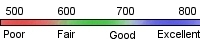
scores range between 300 (extremely poor) and 850 (Excellent).
Many people underestimate the importance of good FICO scores
when applying for a lease and feel that telling the landlord
about your good payment history or paying a higher deposit
will overcome a poor score - It won't! As a leasing
professional, my opinion is that FICO scores are the number
one factor in determining a candidate's eligibility by
landlords.
What do landlords
consider to be "good" and "bad"
credit?
FICO Scores
Applicants having FICO
scores in the 800s are considered excellent candidates and
they are almost always accepted over competing
applicants. Landlords really prefer applicants having FICO scores of
700 or better, but scores in the mid-600s are often
acceptable. Landlords are less likely to accept applicants as
the scores dip into the low 600s. Getting an applicant
accepted with low FICO scores in the 500s or below isvery
difficult.
What are some
of the ways that
you can compensate for poor
credit?
There
are many ways that potential tenants try to compensate for
poor credit on lease applications and offers. I have tried all
of these techniques for clients and I have listed them below,
in order of effectiveness (listed from least to most effective).
Paying a higher security deposit
Success rateLow
Paying a higher security
deposit has not been a very effective technique. If the FICO
scores are very low, the landlord is more concerned about
getting paid every month. The security deposit can only be
twice the monthly rent (legally) for an unfurnished home, so
even a high deposit is not enough to calm the fears of a
landlord who feels he or she may face delinquent rent
payments.
Paying several months' rent in advance
Success rate Low to Moderate
I have had several credit-challenged applicants who have offered to pay
six months, or even a full year's rent up-front. While
this would appear to be very attractive to a landlord, there
is surprising resistance to it. For one thing, it makes the
tenant far more difficult to evict if they are a problem
tenant and have paid many months in advance. I alsohighly
discourage this for the tenant. You would be handing a
property owner a very large sum of money. With all of the
foreclosure and distress situations out there, you may have
the bad luck of picking a landlord who is simply leasing the
home to pocket some cash before he walks away from the
property. As a tenant, you should always minimize your
exposure and pay in regular intervals rather than paying out
any large sums of money all at once (see better technique for
paying in advance, below).
Showing high income, money
in the bank
Success rate Low to Moderate
Having cash reserves is
certainly a plus, but many landlords will question why
someone who has high income or a high bank balance would also
have poor credit. They may feel that this applicant is a
"high roller" or is someone who simply can't manage
money. They may also feel that the applicant may have had
"peaks and valleys", where high income was followed
by high spending. They certainly don't want to get caught in a
"valley" while this person is leasing their
home.
Referral from current or previous landlord
Success rate Moderate
Landlords do appreciate a good
referral from another landlord and this should always be part
of your application package.
However, some landlords do view this with suspicion; the main
concern being the honesty of the referral. The new
landlord may feel that the prior landlord is proving a
positive referral because they are intimidated by the possible
legal consequences of proving negative information (we do live
in a highly litigious society). Or, perhaps they are just
happy to be rid of this tenant, and if a positive referral
helps, all the better. In any case, a referral alone rarely
compensates for poor credit.
Foreclosure or
short sale, but few other derogatory
items
Success rate Moderate
Some landlords get it. They know we are in the midst of the "Mortgage
Meltdown" and that many people are paying skyrocketing
adjustable mortgages on properties that have declined heavily
in value. Plus, job losses with the pandemic have greatly
raised the number of people behind on their mortgage payments.
In this environment, many people have foreclosed on
their homes or have been forced to do a short
sale. Of course, credit scores suffer accordingly. If
there are not too many other derogatory items on your credit
report, some landlords may be sympathetic and be wiling
work with you. Unfortunately, many homeowners do all
they can to pay the escalating mortgage, often leaving other
bills unpaid. As a result, we usually see additional derogatory
items accompanying the credit damage from the loss of home.
Getting a Co-Signer
or Lease Guarantor
Success rate Good to High!
One of the best ways to compensate for poor credit on a lease application than by
including a co-signer or lease guarantor. More than anything, landlords want the
assurance of being able to collect the rent from someone else
in the event that the tenant does not pay. I have had
excellent success getting applicants approved when the
application also includes a strong co-signer. However, many applicants are hesitant to ask a friend or family
member to "go to bat" for them. It can be
embarrassing to have your financial affairs exposed to someone close to you. Many people prefer to keep this part
of their lives private. Also, I have had potential co-signers
refuse to sign the lease after they realized that they would
be "on the hook" for the rent if their friend/relative
didn't pay.
There are also professional
co-signing services who will charge you a fee to co-sign for
the lease and guarantee the monthly payments, in the event
that you were to default on the rent. Be sure to check any of
these companies out carefully, using the Better Business
Bureau, referrals from past customers, and other sources. We
do not endorse any of these companies directly, so be sure to
do your own research.
Setting up an escrow account for
rent payments
Success rate Good to High!
One other technique I have used
for clients with very poor credit is to set up an escrow
account with one year's worth of rent payments (assuming they
have the funds). The funds for the year's rent are deposited
to a third-party company that will disburse the rent to the
landlord each month. There's a small charge for setting up
this escrow type of account. This provides the landlord with a
great deal of security, knowing that the escrow company will
pay the rent on time each month. This also provides peace of
mind for the tenant, knowing that their rental funds are being
securely held in escrow.
Latest
- Getting professional credit repair help!
Success rate Best!
Getting a professional to help
you improve your credit is simply the best thing you can do if
you currently have poor credit! Please understand that it
takes time and effort to improve your FICO scores - It does
not happen over-night and results can never be guaranteed. A
professional will typically assist you in removing old or
inaccurate information from your report and set up a plan to
pay bills on time. They may also recommend secured credit
cards to help you rebuild better credit. I can recommend a
very good professional to help you and the cost is minimal for
the benefits you will receive. Call me at (949) 290-3263.
More tips
- Do's and
Don'ts for leasing or renting a home with bad credit
Do start improving
your credit
There are many ways that you
can start improving your credit scores. Search the
Internet for many ideas and suggestions. There are organizations that will help you repair your credit. They do
this by taking
off items that are inaccurate or that do not belong to you. If
you are not having success in improving your credit yourself,
you may want to consider using professional credit repair
assistance (call me at (949) 290-3253 for a great
recommendation for credit repair)
Do use a
real estate agent to help you
People are often tempted to
shop for a home for lease in the newspaper, Penny saver,
Craigslist, etc. Many of these homes are homes
for lease "by owner". While these ads may be legitimate, there are clearly some risks and disadvantages
to going this route. For example, how do you know that you are
dealing with the real owner of this property? Do you
know whether the owners might be in foreclosure and could be
leasing the home to collect some cash? Will you as the tenant be
protected by using standard leasing, disclosure, and
inspection forms? Many people have lost their deposit and rent
to leasing scams, so always use a licensed real estate agent to
assist you!
Do pay your
rent payments on time
Once you have been accepted
into a lease and have moved into a home, prove that you are
off to new start by always paying the rent, on time.
Do get a Co-Signer for your
lease!
It's
an effective way
to help you get accepted. Check with friends or relatives
or use a professional co-signing service.
Don't try to negotiate the
rent or the security deposit
Negotiations are best done from
a position of strength, and frankly, having poor credit does
not put you in the best of positions. You should really hold
off on asking for price concessions. I have seen
landlords get very upset when they are presented with a
candidate with FICO scores in the 500s who is also making many
demands or asking for
a big discount on the rent.
Don't insist
on seeing homes right away
A good real estate agent will screen homes
first and come up with a "short list" of homes and landlords
that will work with your credit. Select your showings among
these homes and keep home showings to a reasonable number.
Don't try
to maintain your former lifestyle
Many people who have lost a
high-end or luxury home seem to feel that they need to
maintain their former standard of living. They often shun
lower cost rentals, homes with less square feet, or homes that
are less upgraded. If you've had a financial setback, you
should consider living a bit more economically while you are
re-building your credit. Do not fall into the trap of feeling
that you still have to "keep up with the Jones's".
Don't falsify
or alter your information
It's a criminal act to pass off an
altered credit report, so don't even try it. Agents will stop
working with you immediately if they catch you. Listing
agents will also check your employment, ask for proof of
income, etc, so avoid putting false or exaggerated information
on your application. Be upfront and honest at all times.
Don't look
for "creative" ways to purchase a home instead of
leasing
Everyone would rather own a
home rather than rent one. Regardless, if you have major
credit issues, stay away from lease-options, owner financing, AITDs,
loan "take-overs" and other creative ways of purchasing rather than leasing. You will
only get yourself deeper into the ditch!
Here is a Fox
News article that I contributed to, on the subject of renting
with bad credit:
Note: The
comments on this web page are the opinion of the
author and they are not intended as a guarantee that
you will be able to lease a home if you have poor or
substandard credit. Using professional credit repair
or a co-signing service may
be beneficial, but is not a guaranteed solution.
Potential renters are advised to do their own research
regarding the rental process and/or the use of lease
co-signing services. It is ultimately up to each
individual homeowner
(landlord) to
accept potential tenants based on the landlord's
opinion of the tenant's financial
profile and their ability to pay rent (see Disclaimer above).






 Low
Low Low to Moderate
 Moderate
 Good to High!