|
|
|
Once you open escrow, your inspection period begins. This is
sometimes known as the buyer investigation period. The default period
is typically 17 days, but this may be changed depending on what was
specified in your offer or if this time period is countered or overridden
by an addendum. You may cancel the offer (without risk to your
deposit) during this period if you find reasonable objections such as
major inspection issues, HOA law suits, disclosure issues, etc, or if
there are issues in approving your loan During this period, you
are also obligated to work with your lender, get an appraisal, and get
final loan approval.
Your tasks during the buyer investigation / review period
Deposit earnest money: You generally will have 3 business days to
bring your earnest money deposit to escrow. It is typically paid with
a personal check, but you can also wire funds directly to escrow. The
earnest money deposit should not be confused with a down payment,
which is usually a much higher amount. The earnest money deposit (also
known as a "good-faith" deposit) is typically between 1 and
3 % of the purchase price and it is
made by a buyer to demonstrate that he/she is serious (earnest) about
wanting to complete the purchase. This deposit is often used to fund a
few of the initial escrow expenses such as ordering HOA
documents.
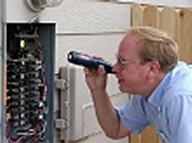
Order home inspection: We will provide you with several home
inspectors that you can contact to perform a whole home inspection. While
this is an optional step, it is highly recommended. The home
inspection is a limited, non-invasive examination of the performed by
a professional, certified home inspector. The inspector will provide
you with a complete report of his findings which you can use to
request repairs, repair credits, or additional inspections. If the
inspection reveals that there are significant issues with the home,
you can also use the information to cancel the sale. You can read more about home inspections, here.
Other inspections: You may request
additional inspections if there are other concerns with the home;
especially if the general inspection recommends further review of a
potential issue. Examples would be a roof inspection, mold inspection,
soil or geological inspection, or others. These extra inspections are
generally paid by you the buyer, but you can always request that the
seller pays for it as part of a request for repairs agreement.
Order C.L.U.E. report: C.L.U.E. is
short for Comprehensive Loss Underwriting Exchange. This is an
optional report, but you may want to order it if you discover that the
seller (or prior owners) have had an insurance claim on the property
within the past 5 years. The report includes the date of
the claim, the name of the insurance company involved, policy number,
claim number, address, cause of loss, amounts paid, status of the
claim, and the name of the insured and the claimant.
Order appraisal: If you are financing the home, we will contact
your lender to order an appraisal. The appraisal is a professional
estimate or verification of market value that uses comparable sales in
the neighborhood or with similar homes in the area to help justify the
sales price and loan amount. The appraisal should come in at purchase
price or higher. If it comes in lower than purchase price, the
lender will not fund the loan for the contracted purchase amount. In
this case there are several options. The buyer can request that the
seller reduce the purchase price to the appraised amount. If the
seller refuses, the buyer has the option of bringing in enough cash to
make up the difference. Very often, the parties agree to a compromise
where the seller lowers the price by a certain amount and the buyer
agrees to bridge some of the gap with extra cash.
Begin working with your lender:
Once your offer is accepted, you
should also contact your lender to begin loan processing. You may need
to provide additional documentation or verify certain information (all
known as 'conditions') in order to get full loan approval.
Complete escrow instructions: Once
escrow is opened, you will receive a packet of escrow instructions.
Some if the documents need to be completed (questionnaires, how you
will take title to the home, etc) while others only need your signatures.
It is important to complete and return these as soon as possible,
especially if you are the buyer and the home you are purchasing has a
homeowner's association. Escrow will need your signed authorization to
order HOA documents. If you are the seller, there may be a document
that you need to sign and also notarize. Drop by a notary public (most
UPS stores have someone who can notarize) and return the document to
escrow.
Order homeowner's Insurance: You
should contact an insurance agent regarding homeowner's insurance and
order a policy that becomes effective when you take possession of the home.
If you are buying a home in condominium or townhouse complex, they
will already have a blanket fire insurance policy (because of common
walls), so this should save you a little on your insurance costs. You
will still want a policy that covers, theft, liability, water damage,
and other issues.
Review seller disclosures: The seller is required to complete a
number of disclosures which provide potential buyers with information
about the home such as past repairs, water leaks, noisy neighbors, or
anything else that the seller is aware of and that may have implications
for you, the buyer. The seller is only required to disclose items that
he/she is aware of. For example, they cannot be held responsible for
things that may have happened with the home unless they actually know
about it.
Review HOA documents: If the home you are purchasing belongs to a
homeowner's association, you will receive a packet of documents to
review which tells about rules, regulations, and current issues (if
any) in the association. If there are multiple associations (egg, a condominium
complex plus a city-wide HOA) you will receive a package from both
associations. It is important that you review these documents to be
sure you agree with the rules of the rules of the association. These
rules are commonly known as the CC&Rs (the covenants, conditions
and restrictions). You should also check for unexpected expenses such
as possible lawsuits within the association, as well as special
assessments. Both of these items could have large financial
implications to all members of the association and unless these are
paid off as part of a purchase agreement, these costs will be passed
to you. One additional note: If you have not
received all of the HOA documents during the inspection period
(typically because of a delay on the part of the property management
company), you do have the right to receive and review these documents
for a period of up to 5 days, even if this is past the standard 17 day
contingency period.
Review Natural Hazard Disclosure
Statement: This report, as also known as the "NHD",
will let you know if the home you are buying lies within any
potentially hazardous areas such as a flood zone, fire zone,
earthquake zone, or other hazardous condition.
Review Title Report: This report
will let you know about existing liens or encumbrances on the property
that could potentially affect your ownership or costs of owning the
property.
Review termite report: It is
traditional in Orange County to have the seller pay for a termite
report and to perform all immediate repairs. This is specified in the
CAR form WPA, which is usually turned in as part of your offer.
Aside from pests, the termite inspector may also note items such as
wood rot or wood deterioration in their report. As the buyer, you
should review this report and make sure all noted items are addressed
by the termite company. This is known as getting "termite
clearance". Clearance is often a requirement by lenders in order
to complete funding. Please note that it is typical for attached
properties (condominiums, town homes, multi-family properties) to
receive local termite treatment (using chemicals) rather than through
the process known as fumigation, or "tenting". This is
because it is not possible to "tent" an individual attached
unit.
Review Lead Based Paint Addendum: If you are buying a home that was built in 1978 or earlier, you will
receive this addendum which warns you that lead based paint may have
been used at one time in the home. If this is a concern to you, you
may order a separate inspection to determine if there is a lead paint
hazard in the home.
Review additional disclosures: You
may receive other disclosures that may be City, State, or Federally
mandated. One example is the Statewide Buyer and Seller Addendum (CAR
form SBSA). These types of forms were developed to inform
buyers about certain material facts in the area, such as jails, power
plants, airports, or other items that might affect your desire to live
in the area.
Request for Repairs: Once you have
completed all of your inspections, you have the option of submitting a
request for repairs (CAR form RR) to the seller. This document
may outline certain items that the buyer would like the seller to
repair as part of the purchase acceptance process. The buyer may also
request that the seller credit the buyer with a certain amount to
cover repair items. This is often done for expediency, as the time
used for actual repairs could delay closing. This process is
negotiable between the buyer and seller, and they typically compromise
on the amount and cost of the repairs. Note that on any repair
credits, the seller can only apply credits to your closing costs and
only to the degree allowed by the buyer's lender. All seller credits
must be listed on the HUD1 statement provided by escrow.
What happens after the inspection period?
Once the inspection period is over, you will be expected to remove
some or all of your contingencies. This is to assure the seller and
listing agent that you intend to go through with the sale. Removing
all of your contingencies will now put your earnest money deposit
"at risk", for in the event that you change your mind about
moving forward with the purchase, the seller may lay claim to your
deposit. Generally, you will be expected to remove all of your
contingencies, however, it is also common to remove as many as
possible while perhaps negotiating to withhold removal of one or more
in case loan approval is still in process.
In the event that the buyer refuses to
remove all contingencies, the seller's agent has the option of issuing
a 24-hour Notice to Perform to the buyer. This form notifies
the buyer that they have 24 hours to either remove all contingencies
or cancel the offer. The seller's agent must decide if it is wise to
issue this form. If there were multiple offers on the home or if
backup offers are available, the listing agent will undoubtedly decide
that issuing a Notice to Perform is correct course of action. The
logic is that if the current buyer cannot perform, it is better to cut
your losses and move on to another buyer. However, if this was a
difficult home to sell, the listing agent may feel that cooperation
with an existing buyer is the smarter route.
What happens as you approach the closing date? Final walk through: Roughly 5 days
before closing we will do a final walk through of the home.Its
primary purpose is to verify that the property is in the condition you
agreed to buy. You will also want to verify that agreed-upon repairs
were completed and that nothing has gone wrong with the home since you
last looked at it. If you also agreed to items that were to be sold
with home, you will want to confirm that they are still there (for
example, a refrigerator). You will then sign the verification of
property condition form. If there are any issues, we will notify the
listing agent right away.
Complete any remaining escrow documents:
If you have any questions, you will want to go
over them with your escrow officer and return the signed
package to escrow.
Sign loan docs: Your lender will
send the loan documents to escrow and they will schedule a time for
you to come in and sign. They will also go over the clauses with
you and provide you with copies of the documents.
Deposit final funds: If you are the
buyer, you will be
required to deposit all of your final closing funds to escrow. This
will include the remainder of your down payment (or full payment if
you are a cash buyer), plus enough cash to cover closing costs and
final expenses. This will usually be in the form of a cashier's check,
or it can be wired directly to escrow. Most escrows over-estimate
the final closing amount to ensure that they have adequate funds to
close. Once the final figures have been calculated, you will receive a
refund check for any overages along with your closing package.
Sign and notarize any short sale
documents: In certain short sales, there may be an additional
document that needs to be signed and notarized by all parties (buyer,
seller, and both real estate agents). This is typically to ensure that
none of the parties are related (also known as an "arm's
length" agreement). This is required in order to successfully
close the short sale, so be sure to get this done promptly!
Call utilities: Don't forget this
step! Call all of the utilities like gas, water, electric, trash,
phone, and cable. I would recommend doing this about a week before you
close to ensure that they will all be on for you when you move
in. If you are buying a home in Orange County, CA, here is a list
of utility company contacts: Orange
County utility companies - By city
Tips for a smooth escrow
Good document handling capabilities
- Unfortunately, we're not yet in a paperless environment.
During escrow you will have to handle and sign many paper documents.
Having access to a computer, e-mail, a printer, and a FAX machine
during escrow will be very helpful. This will also allow you to work
remotely. Many documents will be e-mailed to you as .pdf files which
you will be able to download, print, and sign. These documents can be
faxed or e-mailed back to the sender. As you can see, having good
technology tools at home or work is important.
Finally, stop your home searches! - By this time, you are probably very used to searching for homes on
the internet, getting listings by e-mail, etc. This can be a hard
habit to break, but after opening escrow, it will be very
counter-productive to continue to look at other homes. Ask your agent
to terminate any automatic listing e-mails.
Finally, what not to do during escrowUnless you are an all cash buyer, you will want to "freeze" your financial status while working with your lender. Many people do not realize that lenders will continually monitor your finances while you are in escrow, even though you were previously pre-approved. Any changes to your finances during escrow could threaten to disrupt your loan approval! Second, make your best effort to avoid doing anything that could cause a delay in closing. A few examples would be, 1) being out of the area or difficult to reach. 2) Changing lenders right before closing. A delay of closing on your part could result in daily penalties or worse - Sellers could demand close of escrow and cancel the purchase agreement if you do not comply! During escrow: 1) Don't buy anything significant on credit cards or run up any new bills! 2) Don't take out any new loans (e.g., a new car, furniture, etc). 3) Don't change jobs during escrow! - This may kill your loan! 4) Don't close any accounts - It may make you look like you have less available credit. 5) Don't make any late payments - This could affect your credit scores. 6) Don't change lenders during escrow - If you change lenders right before closing, it could cause a significant delay in closing escrow! 7) Don't plan a vacation during escrow or be difficult to reach - You will need to be available to sign loan docs, disclosures, escrow instructions, etc.
|